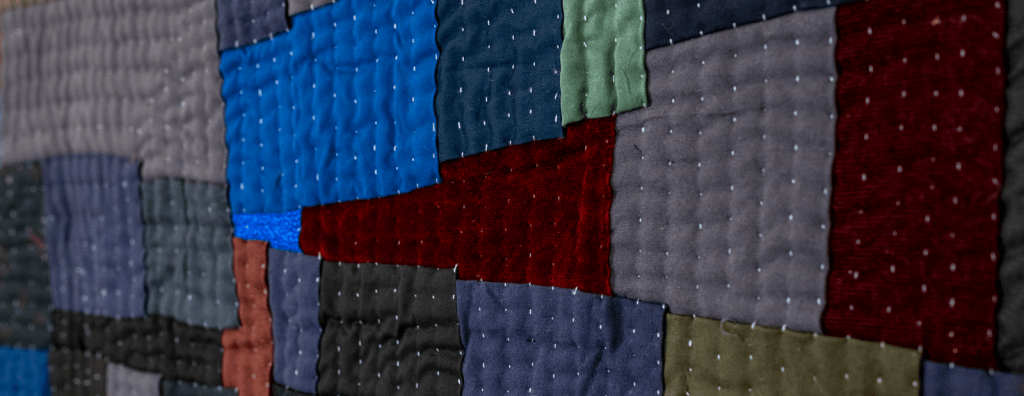
Blue
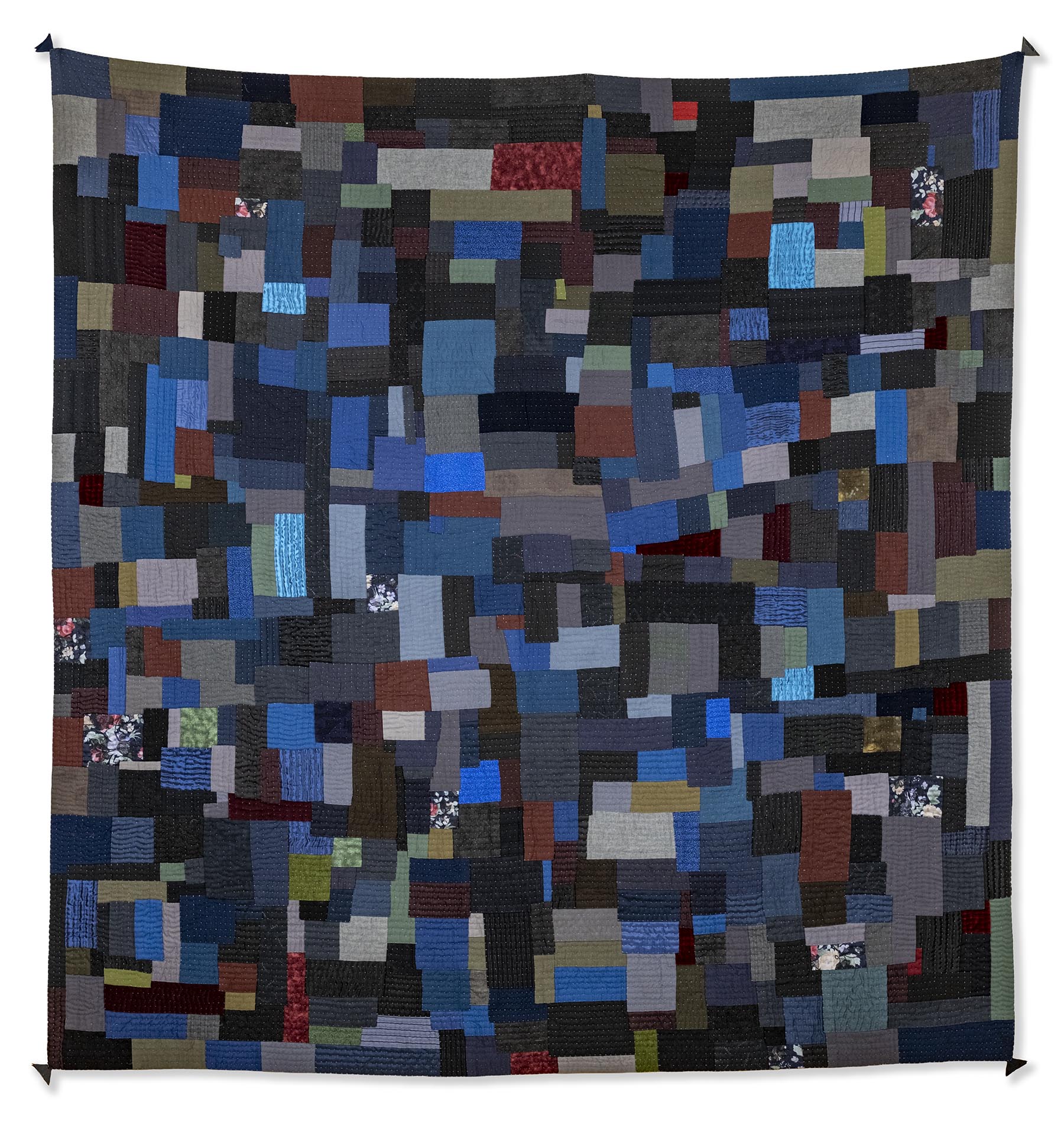
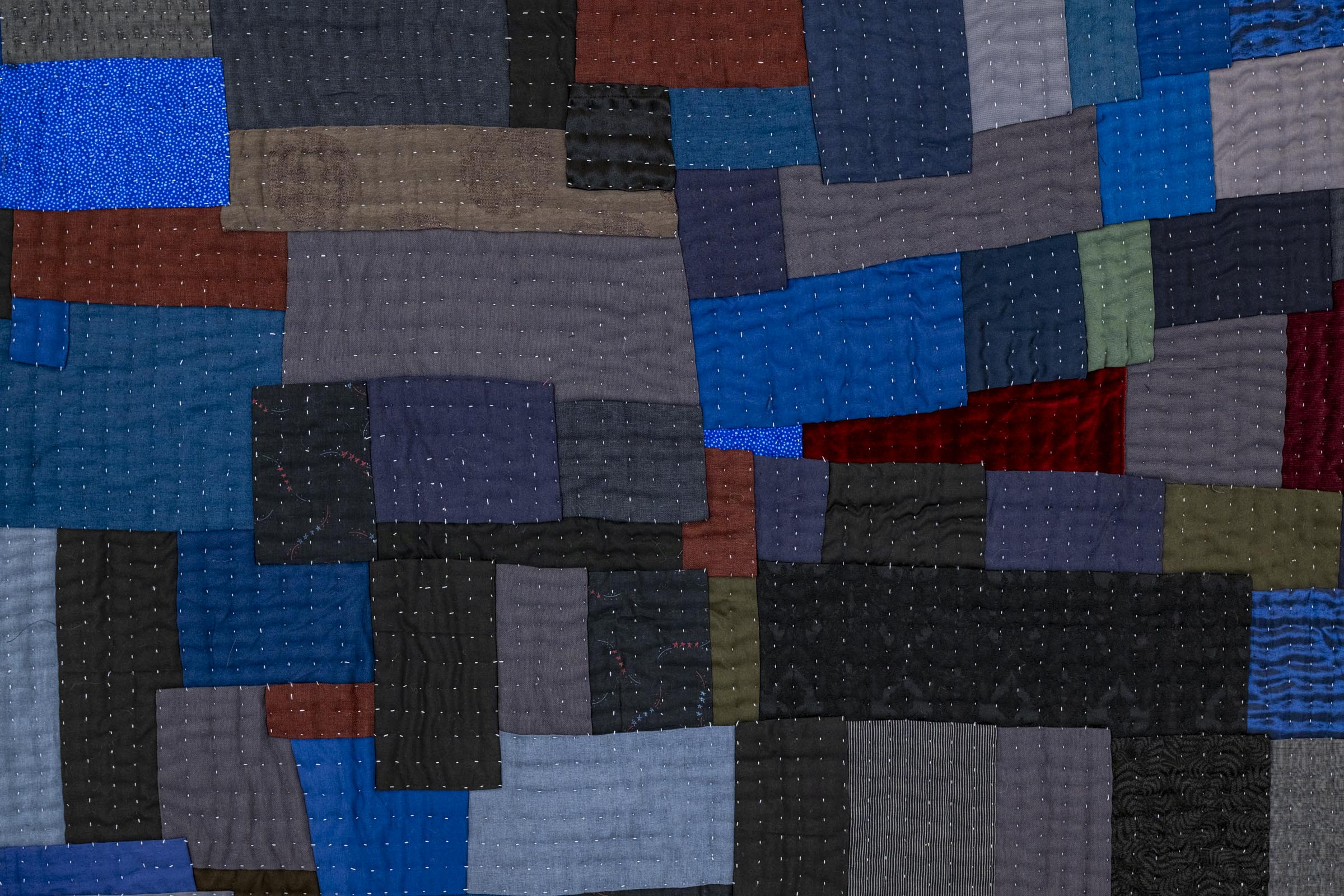
After I finished my sister’s kawandi, I started gathering the fabric for my brother’s. The plan was to go visit in the July holidays which allowed a good amount of time to get the kawandi finished. I started by preparing the backing, by unpicking a flanallete queen size flat sheet and basting a layer of 100% NZ wool batting to it. I was ready to start.
My brother always goes on about bedding being too small, that you can’t wrap yourself properly. He’s always cold, like me, and my hope is that the wool batting will make it warm enough to cope with the freezing temperatures in the Free State (South Africa) during the winter months.
First the fabric for the top had to be cut into pieces. How crazy are quilters … cutting a perfectly fine piece of fabric into pieces, only to stitch it back together again. With a pile the height of my cat, I could start. Slowly I added piece by piece going around the edge. I timed myself on the second and third laps where I didn’t have to add any new pieces yet (which slows down the process somewhat), and it took more than two hours to do one round. I knew it was going to take a while to get it done. I also used a vast variety of types of fabric, from denim to silk, from suede to lining/pongee and anything in-between.
On Christmas eve things changed, unfortunately. With my mum not living in our house in South Africa anymore, the thieves and vandals started to have a field trip. They ripped all the copper pipes off the house and vandalised my mum’s kiln to get to the wire. This meant we had to change our plans quickly. Looking for flights and taking into account Gerry’s teaching job, we picked a date in mid-February to go over, reducing my time to finish the kawandi significantly.
I worked non-stop since Christmas, and with it being stylistic more of a patchwork than a Siddi-style quilt with heaps of tikelis, I was going at a reasonable clip. Not adding the little colourful squares that usually adorn kawandis, which are very time consuming, made the process faster.
I managed to finish at the end of January (a month of full time work), and was quite happy with how colourful it ended up being, despite my attempt to go sad with ‘black & blue’. My initial intention was go use only black, shades of blue and grey colours, but then got carried away when I chose the darker colours. And I’m glad I did.
Rose City
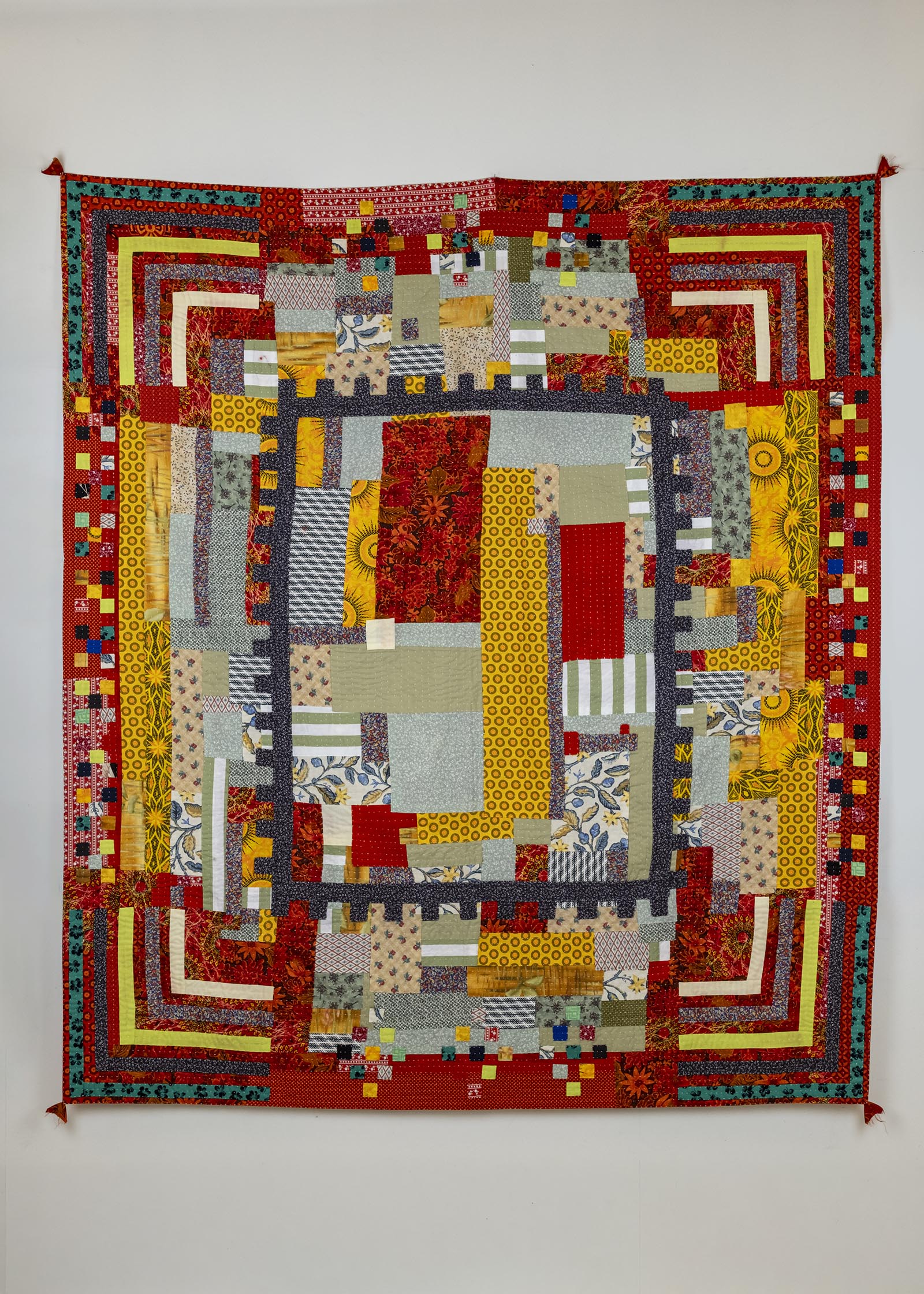
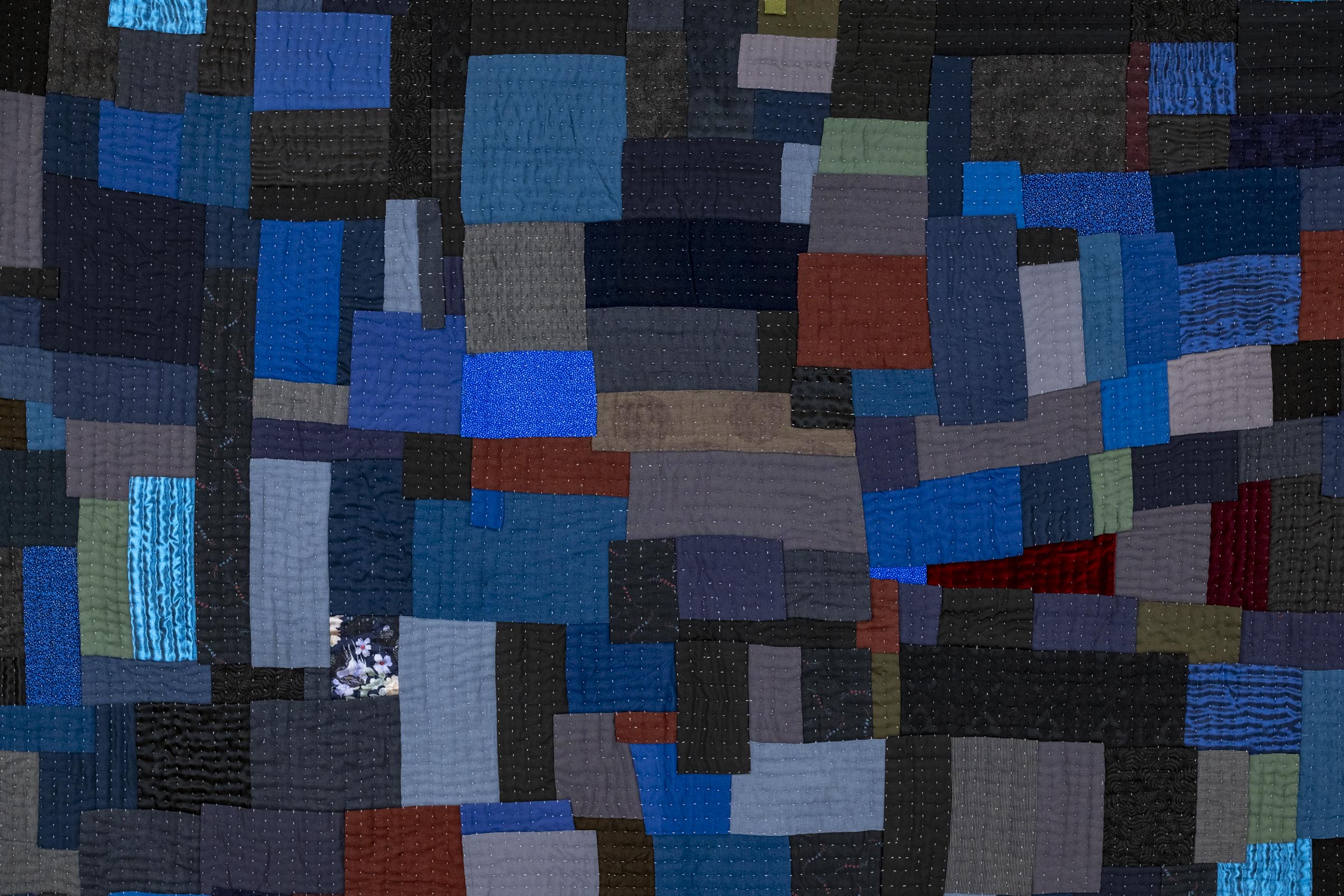
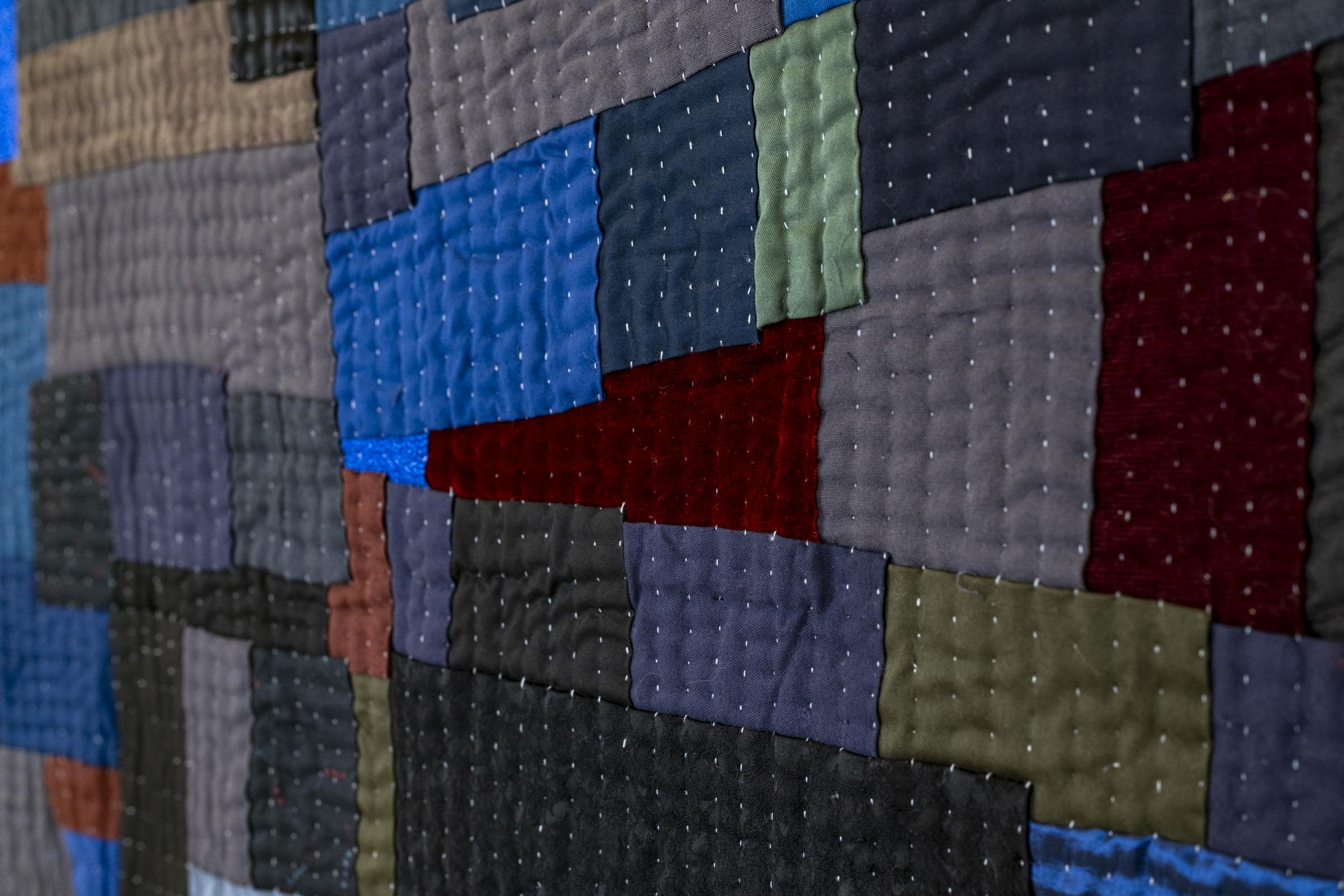
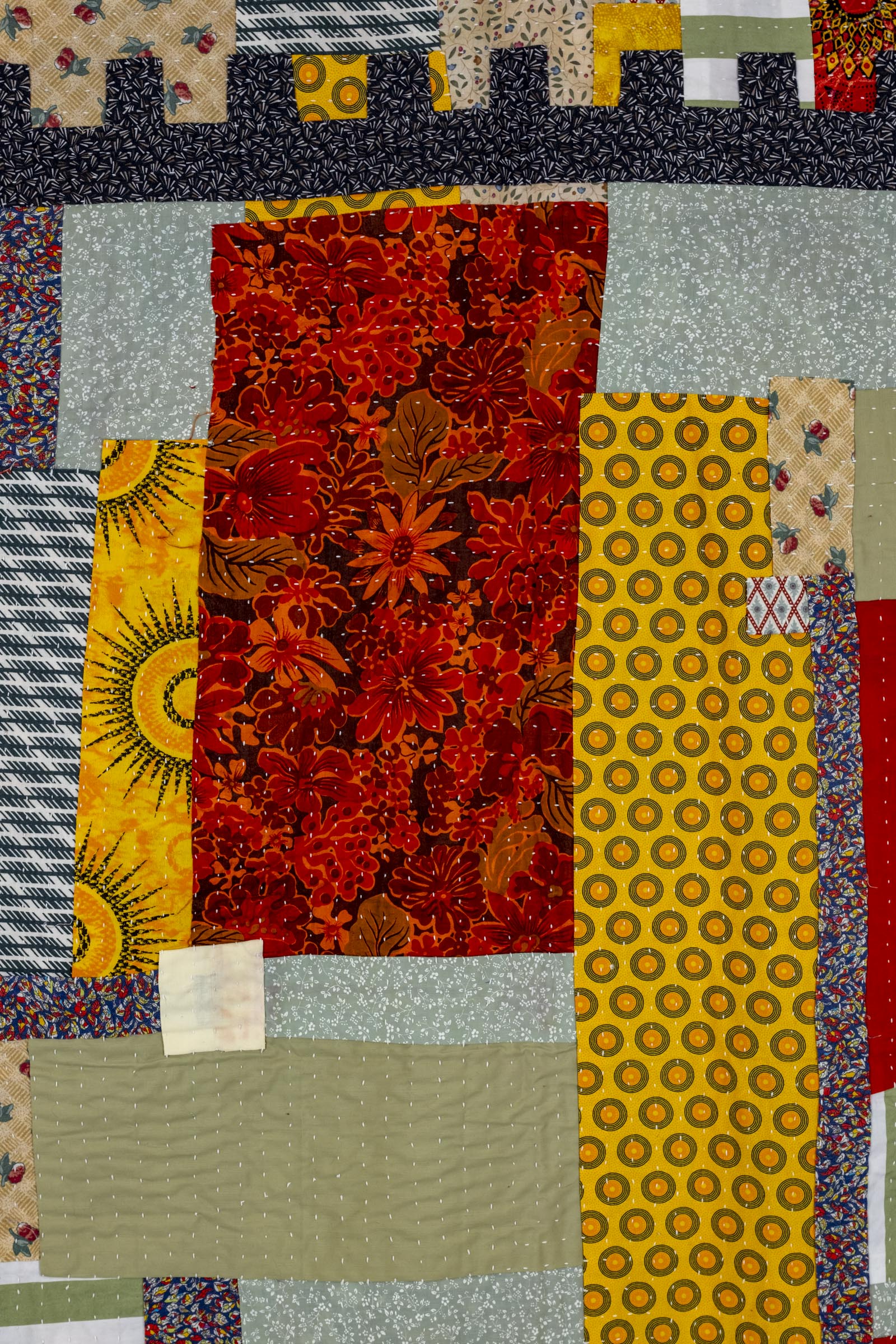
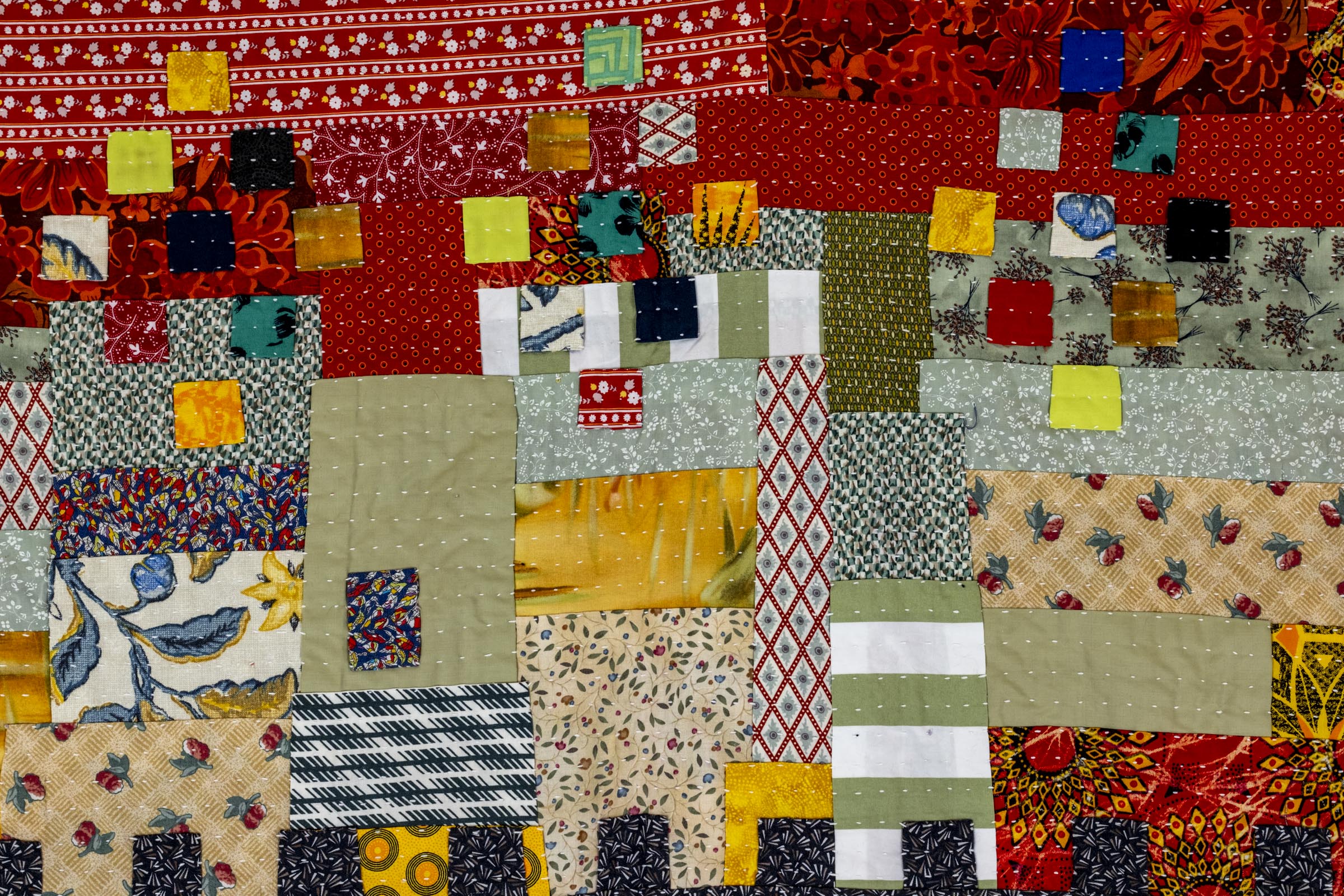
In-between the one for my brother and the one for my sister, I finished a kawandi I started during the workshop in the winter months. Some of the ladies from the local quilting group who attended the workshop, gifted me some fabric that is too thick/hard or soft/thin for traditional western style quilting. This included some shweshwe (colloquially known as African denim) which I love; the patterns, the colours. It reminds me of home and I couldn’t wait te get started. However, after the good start, the quilt show came along, and it was only after I finished my sister’s kawandi for the Celebration of Quilts that I finally got back to finishing this one.
There were some issues with the back (an old duvet cover) that was quite worn out and stretched in parts which caused some folds to appear. But I decided that this kawandi would be the one that will go everywhere with me, the one I intend using all the time. It has been through the washing machine with no issues whatsoever.
One thing I have learned about kawandi-making, is to have a big seam allowance when folding under the pieces of fabric. If not, the raw edges tend to come out, especially between the rows. It is said that the rows of stitching should be close enough to each other that a child’s finger cannot fit between the rows under the joins between the fabric pieces. Some say the rows should be a thumb width apart; other suggest having the rows finger width apart. I have finally got to the point where my row width starts to come naturally with regards to the sizes of my blocks. I instinctively know which size block will fit where, after the seam is folder under.
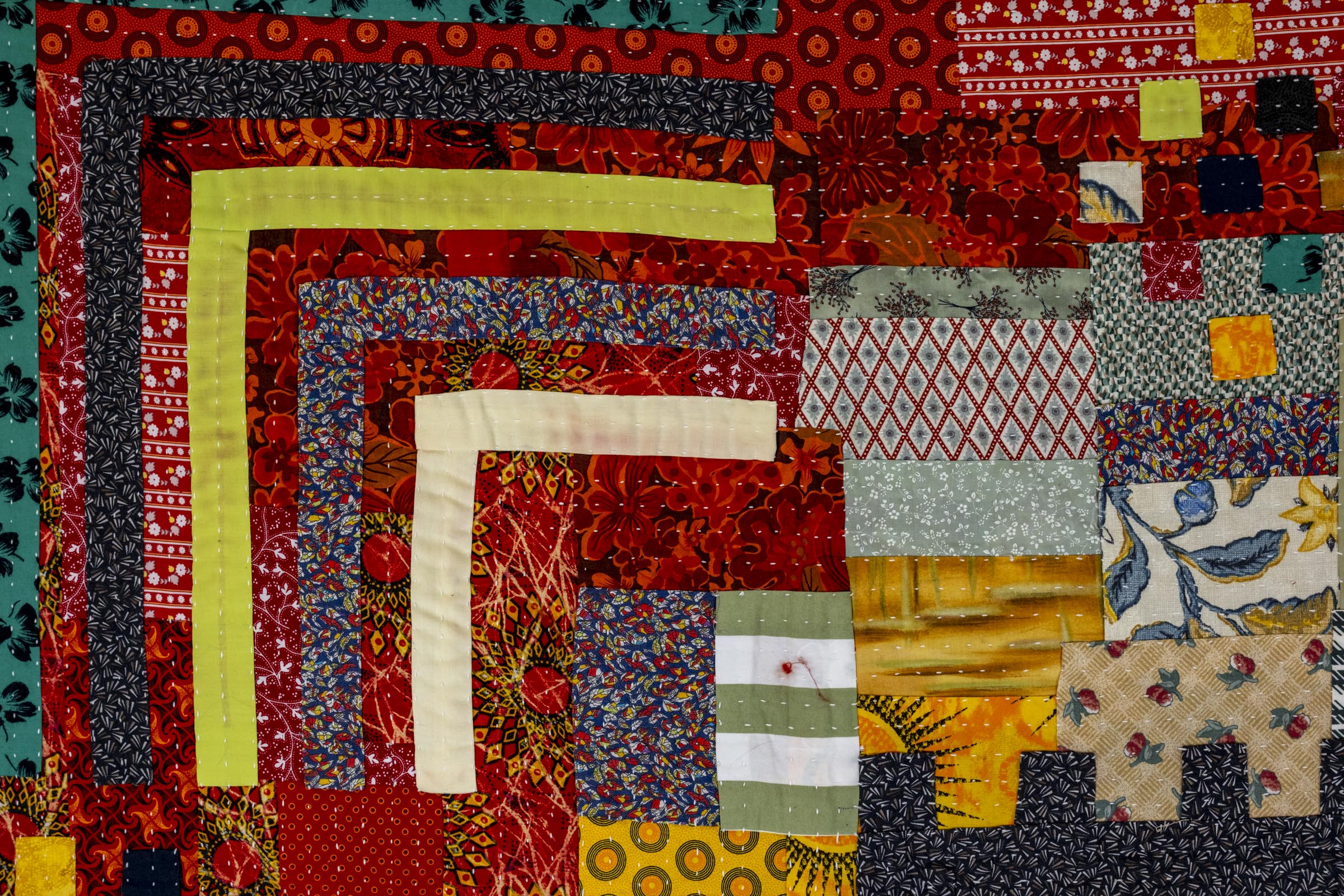
Truth be told, making kawandis that are just ‘patchwork’ is quite easy and relatively quick to make taking into account that everything is hand-stitched. But I do like the look and complexity of adding lots of corner lines, ‘tikelis’, and borders like the Siddi-women do, even though it takes far longer to make.
I’m already thinking about the next one.
Some detail:
 Wouna le Roux
Leave a comment